Biocompatible Coatings for Composite Medical Implants: Enhancing Integration and Performance
DOI:
https://doi.org/10.61186/jcc.5.4.4Abstract
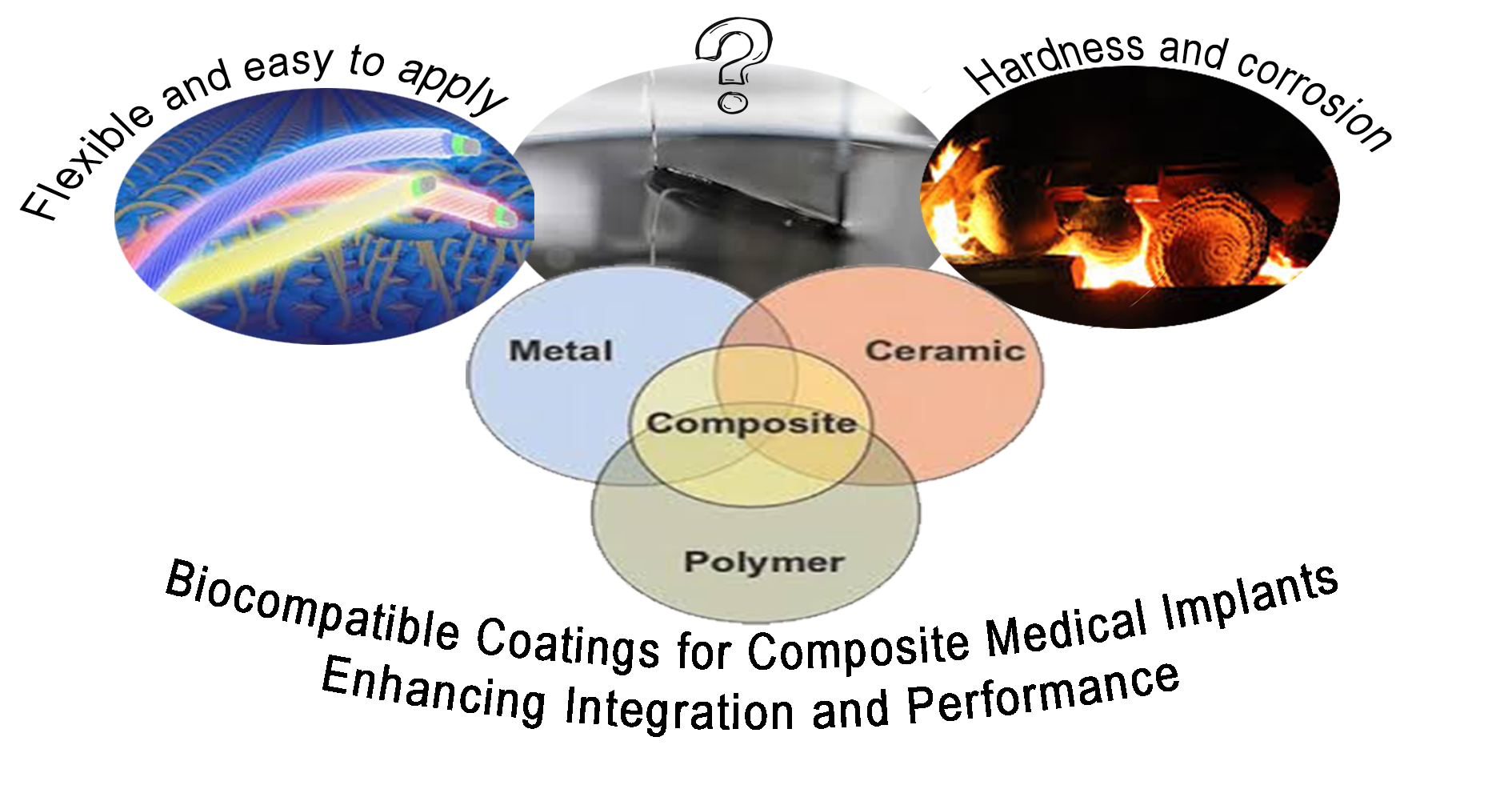
Biocompatible coatings are vital in enriching the performance of composite materials used in medical implants and prosthetics. These coatings improve the interaction between implants and biological tissues, boosting integration and overall functionality. The article discusses three main types of coatings includes polymer coatings (flexible and easy to apply), ceramic coatings (providing hardness and corrosion resistance), and composite coatings (combining polymers and ceramics for enhanced properties). Various fusion techniques, such as spray coating, dip coating, and electrospinning, are employed to achieve optimal coating characteristics. The article also highlights the importance of surface and mechanical testing to assess coating stability. In biomedical applications, coatings like hydroxyapatite for bone integration and titanium-based coatings for wear resistance are critical. Despite advances, challenges remain in creating durable, customizable coatings for specific applications. Ongoing research purposes to develop responsive coatings with smart functionalities, offering potential progresses in medical implant performance.
Published
How to Cite
Issue
Section
License
Copyright (c) 2025 .

This work is licensed under a Creative Commons Attribution 4.0 International License.

