A mini review on machine learning technique for bending and buckling behaviors of different composite structures
DOI:
https://doi.org/10.66224/jcc.6.1.6Abstract
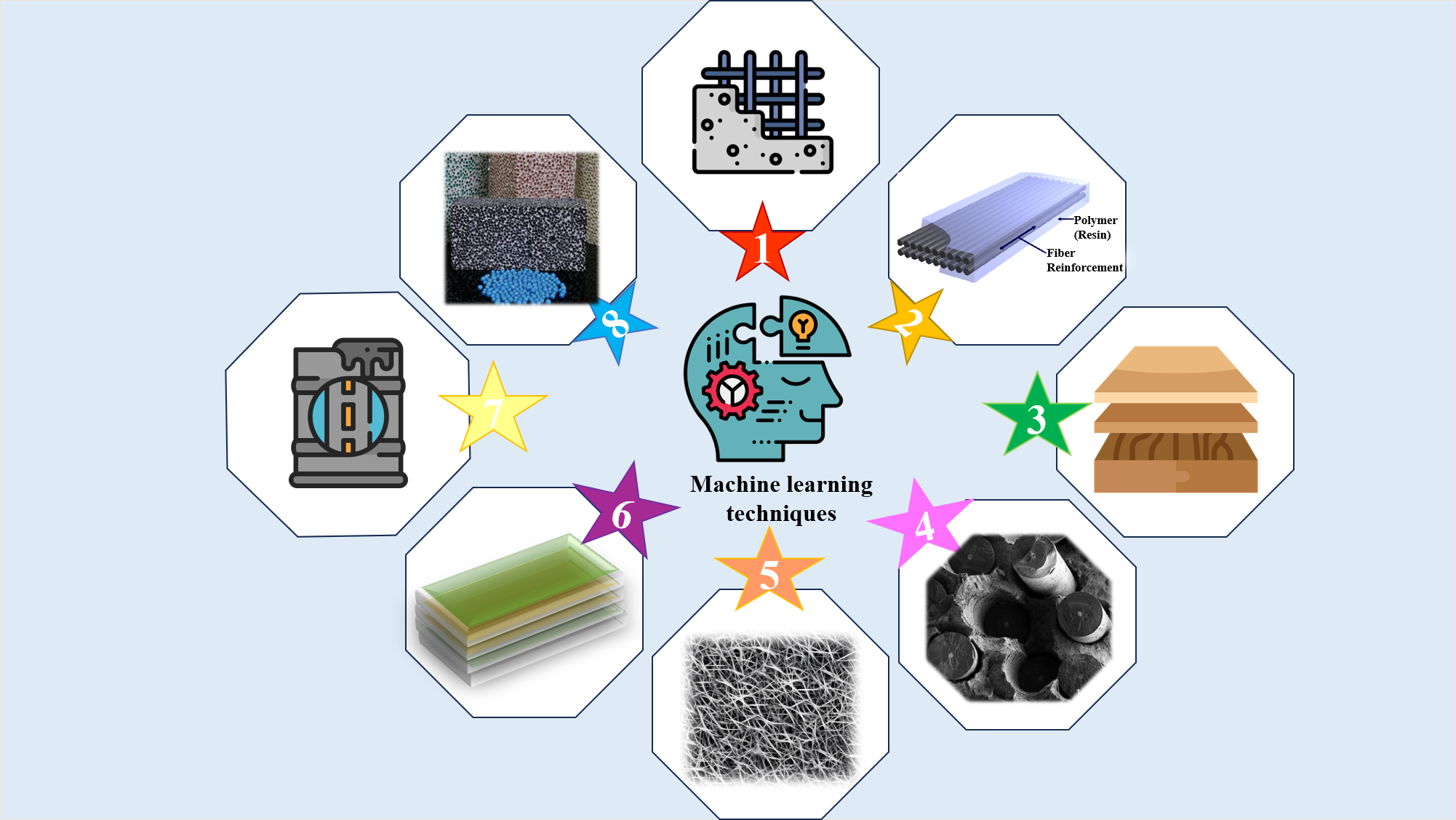
This paper examines recent developments in machine learning (ML) techniques for optimizing and predicting the flexural and buckling behavior of composite structures, including those made from concrete, fiber-reinforced polymers (FRP), wood, and metals. To enhance the understanding of structural system performance and data-driven modeling, various ML techniques are demonstrated and reviewed throughout the paper, including artificial neural networks (ANN), deep learning, and support vector machines (SVM). The paper also provides examples of how ML applications can reduce testing costs while improving design accuracy and fostering innovation in civil, materials, and mechanical engineering.
Published
How to Cite
Issue
Section
License
Copyright (c) 2024 .

This work is licensed under a Creative Commons Attribution 4.0 International License.

