Effect of SrO incorporation on the morphology of sol-gel derived 58S bioactive glass
DOI:
https://doi.org/10.66224/jcc.7.4.3Abstract
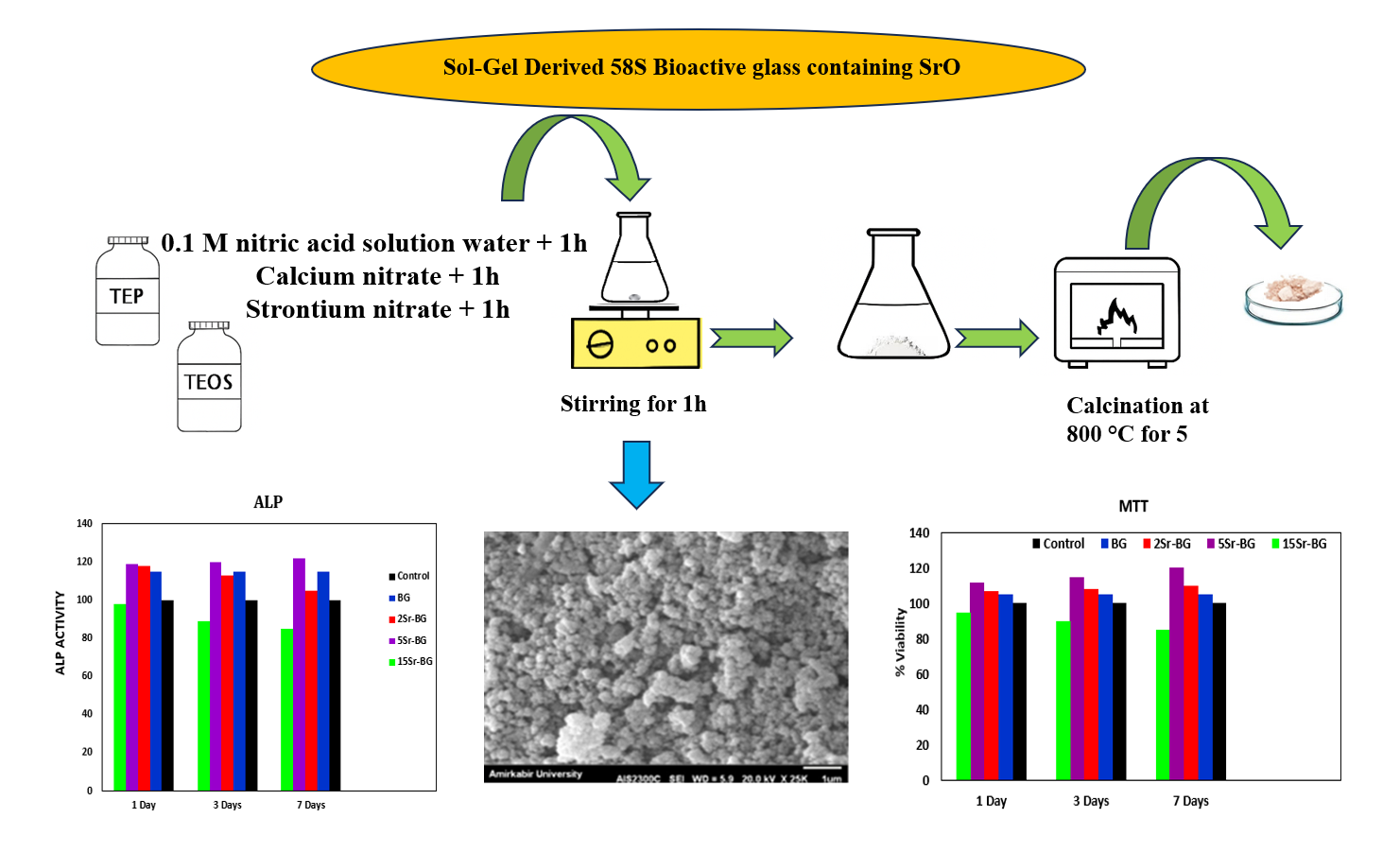
In the present study, the structural properties of SiO2-CaO-P2O5-SrO bioactive glass (BG) were investigated. Bioactive glass powder was synthesized through the sol-gel method and immersed in simulated body fluid (SBF) for a number of days to discover their structure. Precise analysis of the morphological structure of SiO2-CaO-P2O5-SrO bioactive glass employed scanning electron microscopy (SEM). The results established the formation of hydroxyapatite (HA) on the surface of bioactive glass powder. Additionally, it was found that, in day 14th, the hydroxyapatite surface is entirely covered in BGs and its aggregation is a little greater. It was shown that the apatite on the SiO2-CaO-P2O5-SrO bioactive glass surfaces had a spherical form. As a result, the microstructural analysis verified the bioactive nature of Sr-BG, supporting its use in bone-related biomaterial research. Evaluation techniques using the alkaline phosphatase (ALP) and MTT assays demonstrated that low strontium concentrations (2% and 5% SrO) stimulated the growth and differentiation of G292 osteoblastic cells. Lastly, the results show that BG-5Sr is a good fit for dental and bone tissue applications.
Published
How to Cite
Issue
Section
License
Copyright (c) 2025 .

This work is licensed under a Creative Commons Attribution 4.0 International License.

