Composite biomaterials in immunomodulation: A new era in targeted therapy
DOI:
https://doi.org/10.66224/jcc.7.4.2Abstract
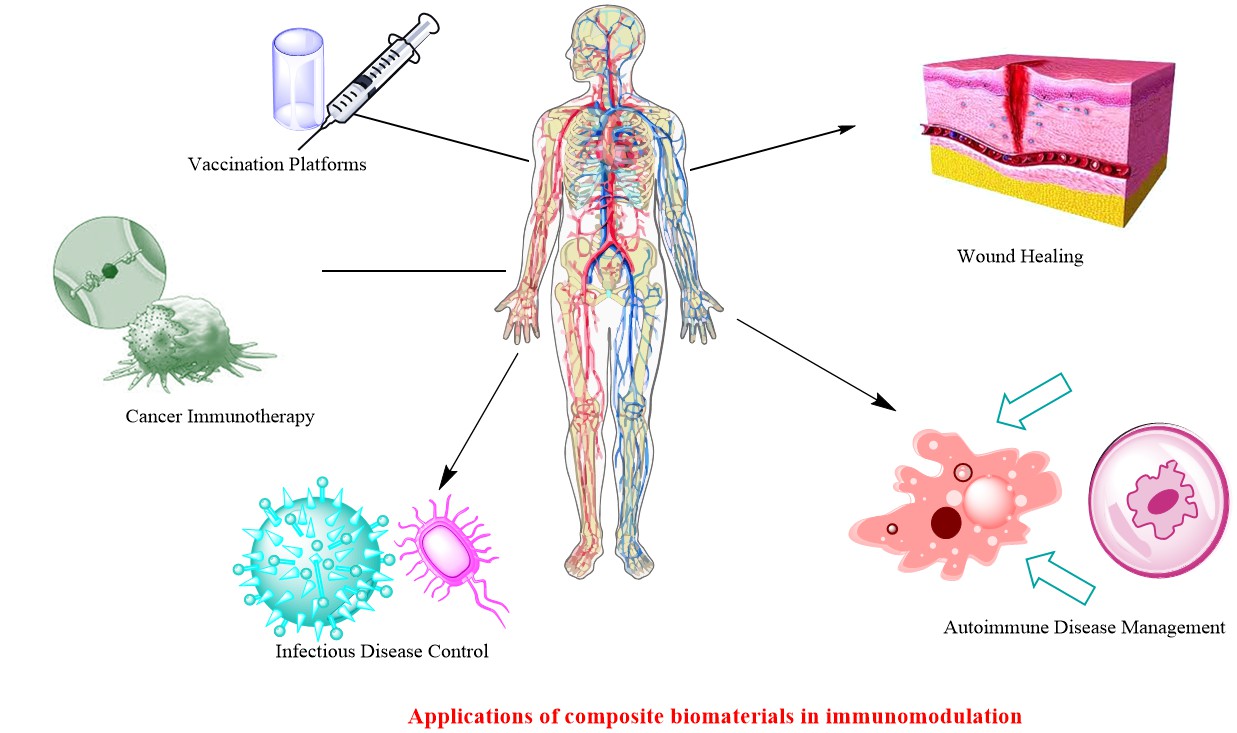
Therapeutic immunomodulation has progressed from broad-spectrum options to precision options that re-engineer immune responses in a spatially and temporally accurate manner. As researchers pursue improved immunomodulatory therapies, understanding how biomaterials impact immune cells is vital. Biomaterials are not simply passive supports for tissues to use, but can provide cues that can durably modulate immune responses and facilitate tissue healing. Researchers are developing biomaterials to shape immune cell behavior, which expands the opportunities for treating diseases (e.g. cancer) and enhancing tissue regeneration. In this review, we review the design principles of composite biomaterials for immunomodulation, focusing on how multicomponent constructions afford synergistic control over immune cell activation, trafficking, and memory. We discuss representative systems and mechanisms emphasizing mutual influences across cancer therapy, autoimmunity, and infectious diseases. In addition to performance functionality, we provide discussion of translational impediments like biocompatability, regulatory concerns, and long-term safety that influence clinical potential.
Published
How to Cite
Issue
Section
License
Copyright (c) 2025 .

This work is licensed under a Creative Commons Attribution 4.0 International License.

