Innovative nano catalysis techniques: transforming heterogeneous and homogeneous
DOI:
https://doi.org/10.66224/jcc.6.2.4Abstract
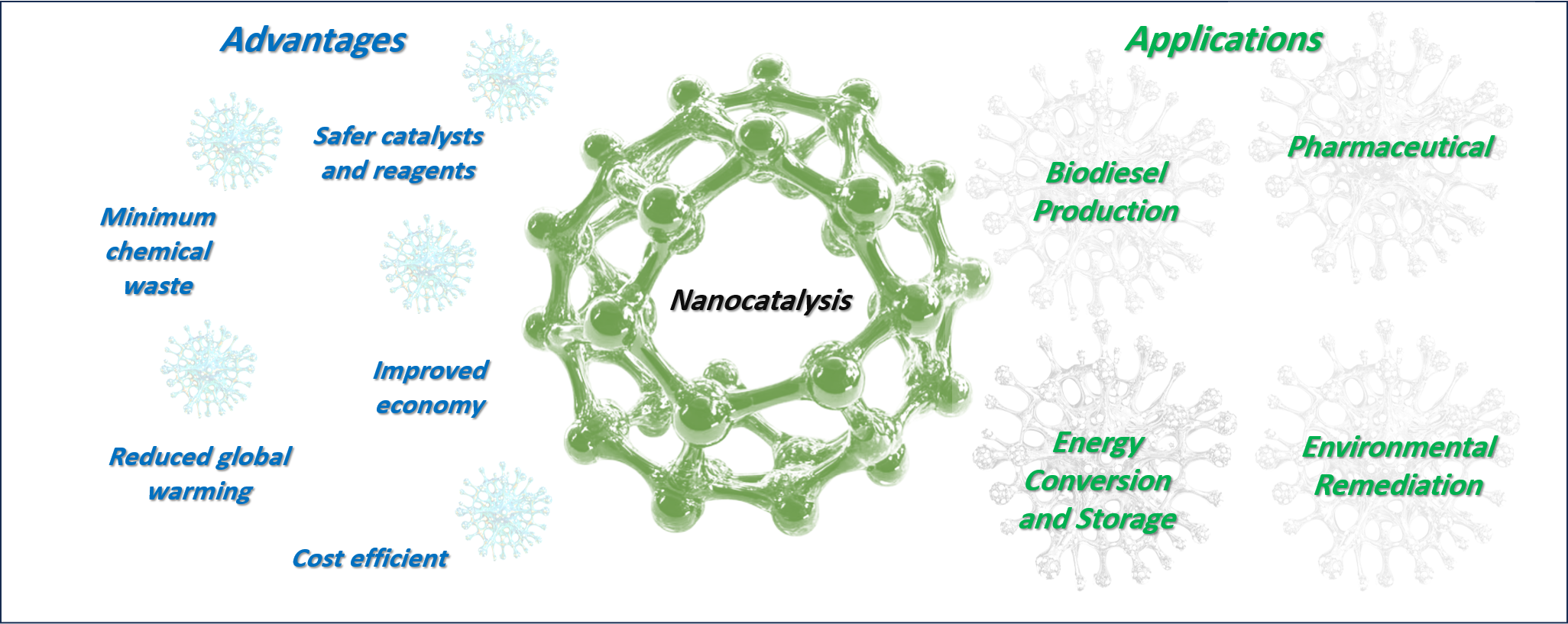
In response to pressing environmental, energy, and sustainability challenges, nanotechnology-driven catalysis is emerging as a transformative approach. Advancements in nanomaterials, especially inorganic nanoparticles, have spurred the development of ecofriendly, efficient catalysts capable of operating in different applications like environmental remediation, energy conversion and storage, pharmaceutical, and biodiesel production. Their high surface area and unique properties such as nanomagnetism and photocatalytic activity, make them versatile for both homogeneous and heterogeneous applications, offering faster reactions and potential cost savings. Nano-catalysis is rapidly progressing as a vital scientific and industrial field, promising sustainable solutions across sectors.
Published
How to Cite
Issue
Section
License
Copyright (c) 2024 .

This work is licensed under a Creative Commons Attribution 4.0 International License.

