The Evolution and Future Potential of Nanocatalysis: Metal-Organic Frameworks-derived
DOI:
https://doi.org/10.61882/jcc.7.2.4Abstract
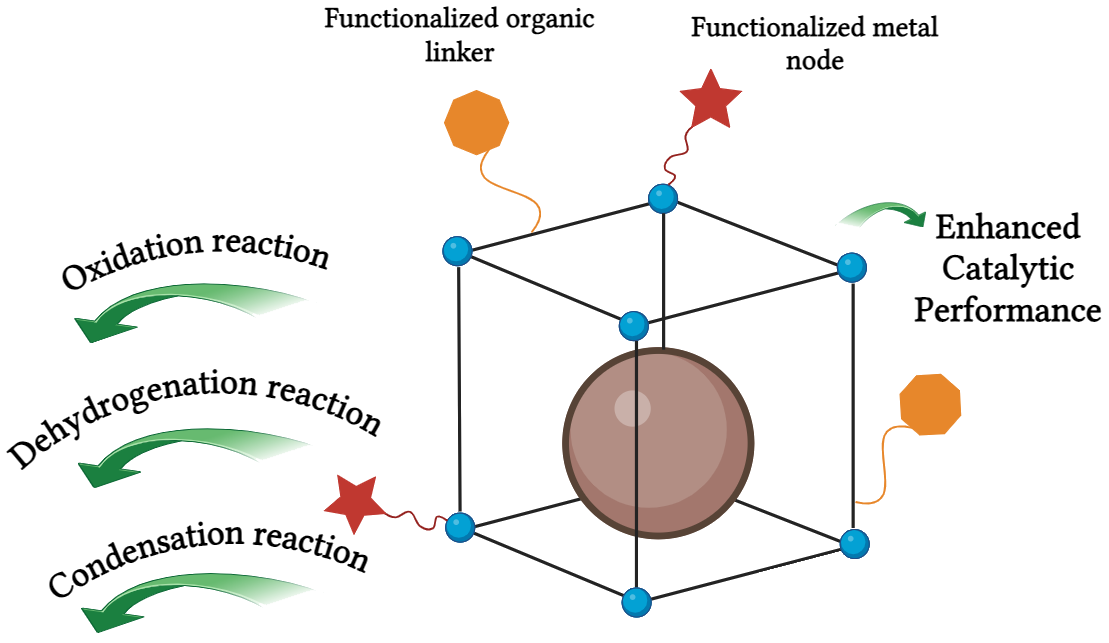
Metal-organic frameworks (MOFs) and their derivatives form an innovative class of materials known for their small pore sizes, lightweight characteristics, and tunable physical and chemical properties. They are well-regarded for their large surface areas and ability to hold substantial quantities. These features render them highly promising for applications in nanocatalysis. This review offers a comprehensive overview of various methods for synthesizing MOFs and their current applications as nanocatalysts, catalyst supports, and membranes in hydrogen production and environmental cleanup. The review addresses the potential advantages and challenges of employing MOFs and related materials as nanoscale catalysts. The aim is to foster their development and provide valuable insights for researchers concentrating on hydrogen generation and environmental remediation.
Published
How to Cite
Issue
Section
License
Copyright (c) 2025 .

This work is licensed under a Creative Commons Attribution 4.0 International License.

