3D Bioprinting Bioinks: an up-to-date overview
DOI:
https://doi.org/10.61186/jcc.6.3.3Abstract
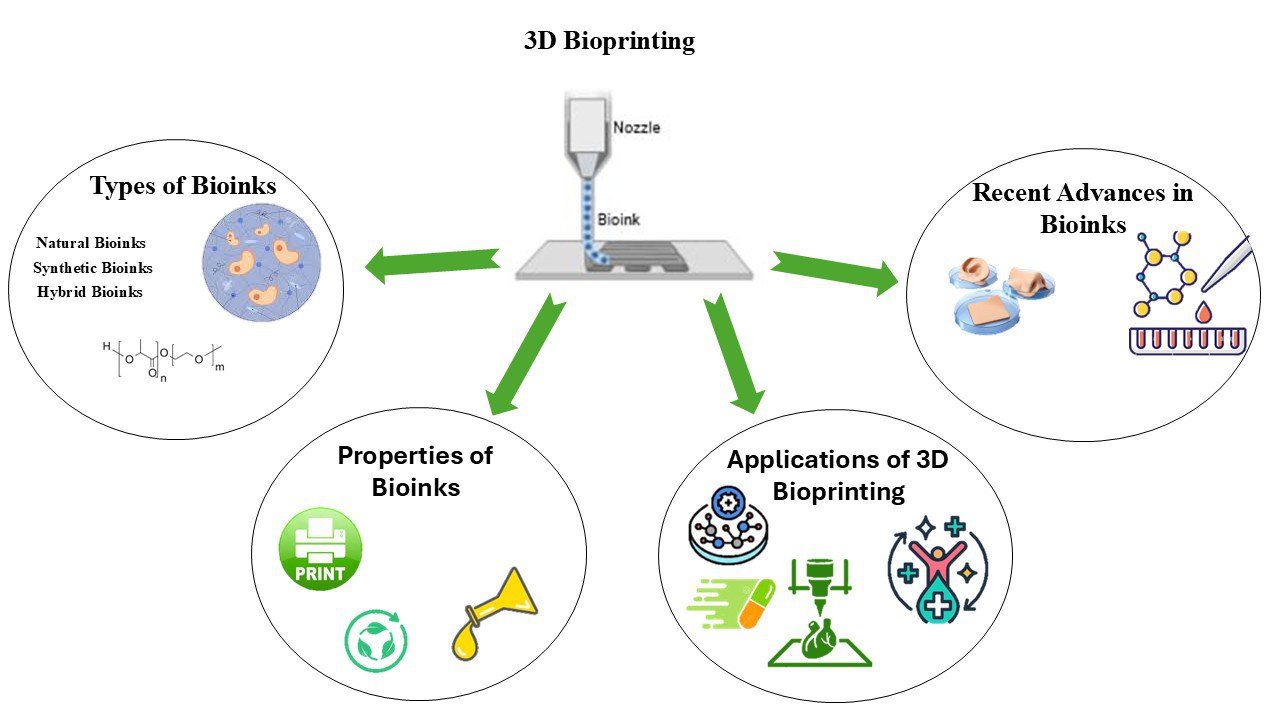
3D bioprinting has emerged as a transformative technology in the fields of tissue engineering and regenerative medicine, empowering the precise fabrication of complex biological structures. Central to this innovation is the development of bioinks materials that combine living cells with biomaterials to create scaffolds that mimic the natural extracellular matrix. This review explores the various types of bioinks, including natural, synthetic, and hybrid formulations, highlighting their unique properties such as rheological behavior, biocompatibility, degradability, and printability. Recent advances in bioink development, especially the emergence of smart bioinks that respond to environmental stimuli and bioinks tailored for specific tissues, are discussed in detail. Additionally, the applications of 3D bioprinting with bioinks are examined, including their roles in tissue engineering, drug delivery systems, organ printing, and regenerative medicine. The ongoing research in this field promises to enhance the functionality and effectiveness of bioprinted constructs, paving the way for personalized medical solutions that address critical challenges in healthcare. As the technology continues to evolve, it holds important potential for revolutionizing how we approach tissue repair and organ transplantation, ultimately improving patient outcomes and advancing our understanding of biological processes.
Published
How to Cite
Issue
Section
License
Copyright (c) 2025 .

This work is licensed under a Creative Commons Attribution 4.0 International License.

